Queer Places:
University of Cambridge, 4 Mill Ln, Cambridge CB2 1RZ
Bedford College, 48 Bedford Square, London WC1B 3DR, United Kingdom
Nettlesworth, 76 Wickham Hill, Hurstpierpoint, Hassocks BN6 9NP, UK
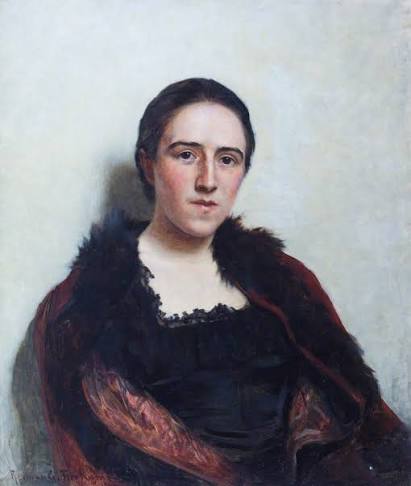 Katharine Jex-Blake (November 18, 1860 – March 26, 1951) was born on November 18, 1860, in Norwich, Norfolk, England, into a prominent and intellectually distinguished
family. She was the daughter of Thomas William Jex-Blake, a prominent clergyman, headmaster of Haileybury and later Dean of Wells, and Henrietta Cordelia Woolmore. She was
also the niece of Sophia Jex-Blake, the pioneering physician and feminist campaigner who fought to open the medical profession
to women. Katharine inherited both her family’s strong academic drive and their pioneering spirit, pursuing a path that would place her at the heart of the movement for
women's higher education in late-Victorian and Edwardian Britain.
Katharine Jex-Blake (November 18, 1860 – March 26, 1951) was born on November 18, 1860, in Norwich, Norfolk, England, into a prominent and intellectually distinguished
family. She was the daughter of Thomas William Jex-Blake, a prominent clergyman, headmaster of Haileybury and later Dean of Wells, and Henrietta Cordelia Woolmore. She was
also the niece of Sophia Jex-Blake, the pioneering physician and feminist campaigner who fought to open the medical profession
to women. Katharine inherited both her family’s strong academic drive and their pioneering spirit, pursuing a path that would place her at the heart of the movement for
women's higher education in late-Victorian and Edwardian Britain.
She was educated at Girton College, Cambridge, one of the earliest residential colleges for women. At Girton, she distinguished herself academically, reading Classics and
achieving a first-class result in the Classical Tripos in 1882, although women were not officially awarded degrees by the University of Cambridge at that time. Following the
completion of her studies, she spent several years teaching Classics, including a period as a lecturer at Notting Hill High School and a brief tenure teaching at Girton
College itself, before undertaking further study at Newnham College and briefly teaching at Bedford College, London.
In 1895, Jex-Blake returned permanently to Girton College as a resident lecturer in Classics, beginning a lifelong association with the institution that defined her
professional life. Over the next two decades, she became an indispensable pillar of the college community. In 1916, following the departure of
Constance Jones, Jex-Blake was appointed Mistress of Girton College, a position she held until her retirement in 1922. Her tenure as Mistress coincided with the tumultuous
and transformative years of the First World War and the immediate post-war era. She navigated the college through severe financial and logistical wartime strains while
steadfastly upholding academic standards. Furthermore, she played a vital role in the ongoing, hard-fought campaign for women's admission to full membership and degree
rights within the University of Cambridge, laying crucial groundwork even though full university degrees for women were not formally granted until 1948.
Beyond her administrative and academic duties, Jex-Blake was deeply embedded in the intellectual and social networks of early academic women. Her personal life reflected
the close, supportive bonds characteristic of the female academic communities of Oxford and Cambridge during an era when traditional marriage often precluded women from
pursuing independent careers in higher education. Within these scholarly circles, intimate emotional bonds, lifelong domestic partnerships, and profound friendships between
women provided both personal fulfillment and professional stability. Jex-Blake shared significant parts of her personal and professional life within this network of women
scholars, educators, and reformers who fostered autonomous spaces for female intellectual achievement.
Following her retirement as Mistress in 1922, Jex-Blake remained active in educational and community affairs while maintaining close ties to Girton College as an
influential emerita figure. She passed away on March 26, 1951, at the age of ninety, leaving a legacy as a dedicated classicist, an institutional builder, and a central
figure in the history of women's education at Cambridge.
References:
- Oxford Dictionary of National Biography (ODNB): Fernanda Helen Perrone, "Blake, Katharine Jex- (1860–1951)".
- Archival Collections at Girton College, Cambridge: Personal papers, correspondence, and administrative records held within the Girton College Archive (including papers relating to her tenure as Mistress and resident lecturer).
- Norfolk Record Office: Family papers of the Jex-Blake and Buxton families, containing correspondence between Katharine and her sisters (Reference: MC 233/36).
- Rita McWilliams-Tullberg, Women at Cambridge (Cambridge University Press).
- Barbara Stephen, Girton College 1869–1932.
- Mary Beard, Gillian King, and Christopher Stray, The Birds and the Bees: Women in Classics, Cambridge 1871–1948 (Cambridge Classics Faculty).
Support this project
This website is a passion project researched, developed, and funded entirely by me. If you find the content valuable and would like to help support the ongoing research and hosting costs, any contribution is deeply appreciated.
Thank you for keeping this independent resource alive!
My books on Amazon: Elisa Rolle's books
BACK TO HOME PAGE